Financial freedom does not simply mean having lots of money but the ability to control your time, decisions and future. It is a place in life where your investments or assets or any other kind of passive income will be sufficient to support your living costs without having to rely on a steady job or worrying about how to make ends meet.
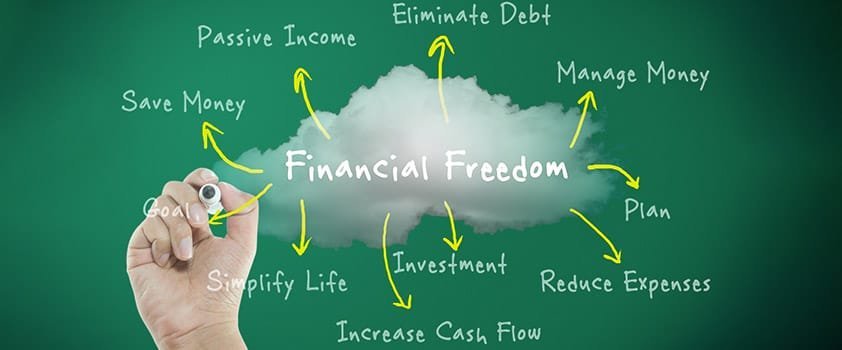
Financial freedom seems to be a far off dream, however, in truth, it is a systematic process that can be attained by discipline, planning as well as making intelligent choices. This roadmap will guide you on the step-by-step process that will see you transition to a long term dependence off financial instability with simple and sensible steps.
What the Real Deal is with Financial Freedom
It is necessary to know what financial liberation means to you before embarking on the trip. To others, it can be early retirement. It is also a way of living a comfortable life with no debts, no stress, and no paycheck-to-paycheck life. The concept of financial freedom is a very personal one, however, the principles are universal and applicable to all people; this is ensuring that the income is stable, expenses are managed, saving is effective, investments wise, and long term planning.
It is not luxury and displaying wealth but it is security, choice reminders, and peace of mind. As soon as you will identify your version of financial freedom, your goals will become more evident and your actions will be more focused.
Developing a powerful financial mentality
The initial and the most strength-giving step in the roadmap is the change of mindset. Fortune is acquired in the head and later on the bank account. You need to change into long-term vision as opposed to short-term thinking. It involves learning to be patient, disciplined and not to have immediate gratification. As opposed to immediate gratification, you begin to place emphasis on stability, development, and comfort in the future.
People who are not bound by money, but rather by their principles, consider a system, habits, and strategies but not fast money. Money is actually a tool that you can use rather than something that causes fear and pressure when you begin to develop a growth mindset. This is the attitude that becomes the basis of all the financial decisions you make.
Establishing Strong Financial Objectives and Focus
Money cannot be managed without objective purposes. Financial freedom must be planned structurally with set goals. The choice is up to you on what amount of wealth to accumulate, when, and why. Short-term objectives can be settled debts, and savings, whereas long-term can be assets, investment development, and streamlined revenue generation. As soon as you set specific and time-related goals, your financial behavior will have a purpose. Goal clarity also enables one to measure progress and keep going even when going through tough times in the journey.
Finding the Balance of Income Control and Steadiness
Money is the driver of your financial life. A lack of a solid and increasing revenue causes development to become stagnant and unpredictable. The financial freedom pathway starts with finding sources of reliable income. These involve developing capabilities, enhancing marketability, establishing professional worth and establishing new sources of income.

Financially independent individuals are concerned with diversification, as opposed to relying on one source. The foundation is active income and the reinforcement is side income and passive income. Increasing income is not only the issue of earning more but also the creation of systems that will continue to earn money.
Development of a Smart Spending Structure
Financial outcomes can be characterized by spending habits rather than level of income. Poor spending habits despite the high income still result to financial stress. The financial freedom needs to be consciously spent and not excessively constrained. You need to know how to distinguish between needs, wants and unnecessary costs.
Smarter spending is concerned with value and not price. It entails matching your costs with your priorities and long term objectives. The surplus money that is brought about by controlled spending brings about opportunities of saving and investing. Money begins to act on your behalf rather than dictating to you when spending is becoming purposeful.
Creating an effective Saving System
Financial freedom is comprised of savings. They save you during a crisis, anytime, and unforeseen situations. The initial step is the accumulation of emergency fund which is a period of several months living on the bare minimum. This money sets you financially and emotionally stable so that you can make a decision without fear. Other than emergency savings, long-term savings are used in financing investments, business opportunity, and asset-building. Saving does not mean squirrelling but rather inventing financial security which makes growth possible.
Getting rid of Debt and Financial Liabilities
One of the largest burdens on the financial freedom is Debt. The debt with high interest robs fund, weakens opportunities, and raises stress. The roadmap will need a methodical way of getting rid of debt. This implies that repayment should come first, and one should not take unnecessary loans and make habits that will not make them indebted. Uncontrolled borrowing is not possible with financial freedom. Financial flexibility is enhanced as the debt becomes lower.
Investing in Wealth Creation
Saving is safe, whereas investment increases. Financial freedom is the motive of investment. Compounding, consistency and patience are the three elements that contribute to long-term wealth. Smart investing emphasizes on diversification, risk avoidance, and long-term growth as opposed to making instant money.
Gambling or speculation does not make one financially free; investment strategies through discipline make one financially free. Investing can be in terms of assets, businesses or long term financial instruments and this way, your money will be working on your behalf even when you are not working. In the long run, investment income is one of the key financial independent sources.
Creation of wealth without any protection is unstable. The financial liberty demands good discipline, risk management and protection measures. This incorporates insurance planning, emergency funds, diversification and financial awareness. Wealth insurance means that an individual crisis does not ruin years of achievement. Financial discipline also involves not experiencing lifestyle inflation, emotional money and money shortcuts. Sustainable wealth is slow but long lasting.
Conclusion
Being financially free does not come on a silver platter. It is an ongoing growth process, learning, discipline and improvement process. Each of the steps is based on the other one and forms a solid financial base that contributes to long-term independence. The roadmap is not complicated but has a tremendous effect: develop an attitude, manage money, spend wisely, save regularly, get out of debt, invest well, build passive income, shield wealth, and create a balanced life.
Being adhered to and with patience, this roadmap will turn the financial strain into the financial strength and uncertainty into the long-run security. Financial freedom does not belong to a select few people; every individual can become one of them provided he or she is ready to follow the path and is disciplined, visionary and persistent enough.